

Heavy Thoughts Before a Heavy Move
Some of the most demanding towing and transport calls we take do not arrive with sirens or urgency. They arrive with a list of numbers: weight, height, width, length, and a pickup location that may not have straightforward access. A US-60 heavy transport requires that kind of careful foundation, because the prep work determines the outcome. Skipping it creates problems that surface at the worst possible moment.
The range of loads we move includes disabled commercial trucks, heavy equipment, and oversized machinery that requires a permitted corridor before it can travel. No two jobs look alike, but the planning process follows the same framework every time. The questions we ask at the start shape every decision that follows, from what equipment we dispatch to how we build the route.
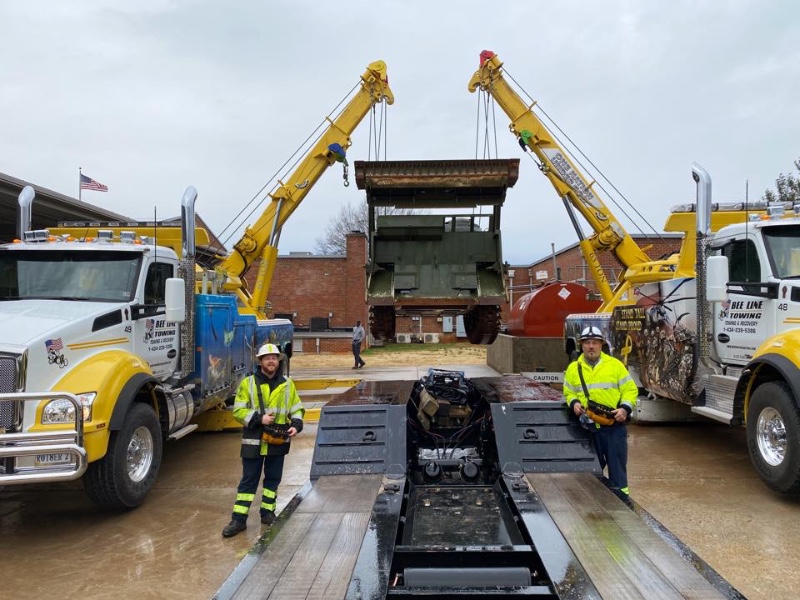
The Numbers That Drive the Plan
For a US-60 heavy transport, we confirm height, width, and length from the actual unit in the field, not from paperwork. Loads shift during transport, suspension damage changes ride height, and add-ons create high points that a spec sheet will not capture. The measurement we take at the scene is the one we plan around.
Axle weight is where a US-60 heavy transport gets VEEERY precise. Gross weight tells part of the story. But roads and bridges distribute their concern across axle groups, not the total load.
A damaged frame, off-center cargo, or collapsed suspension all shift that distribution. Getting it right before the move prevents a much harder conversation during it.
Planning the Path Forward
Bridge and Overhead Clearance
When it comes to US-60 heavy transport, posted clearance heights are limits, not targets. We build every route around the lowest point with a buffer kept on purpose, because road dip, approach angle, and years of resurfacing can reduce actual clearance below what is posted. A margin that looks comfortable on a map can disappear fast in the field.
Ground Conditions and Staging Access
Soft ground, narrow entrances, sharp turns, and low-hanging trees all affect how we position equipment and if a setup is even possible at a given location. We ask about conditions at both the pickup and the drop-off before we commit to a plan, because surprises at either end slow everything down.
Load Type and Permit Scope
A vehicle or piece of equipment that exceeds legal weight, height, width, or length needs a permit before it moves. Permits set the approved route, travel hours, and escort requirements. We coordinate that process so the move stays within legal limits from the first mile to the last.
Before any move begins, we confirm:
- True height to the highest point, including any attachments or raised components
- Gross weight and axle group distribution, accounting for load position and damage
- Frame and suspension condition, including anything that affects ride height or rolling
- Staging and access conditions at pickup and drop-off
- All overhead and weight restrictions along the planned corridor
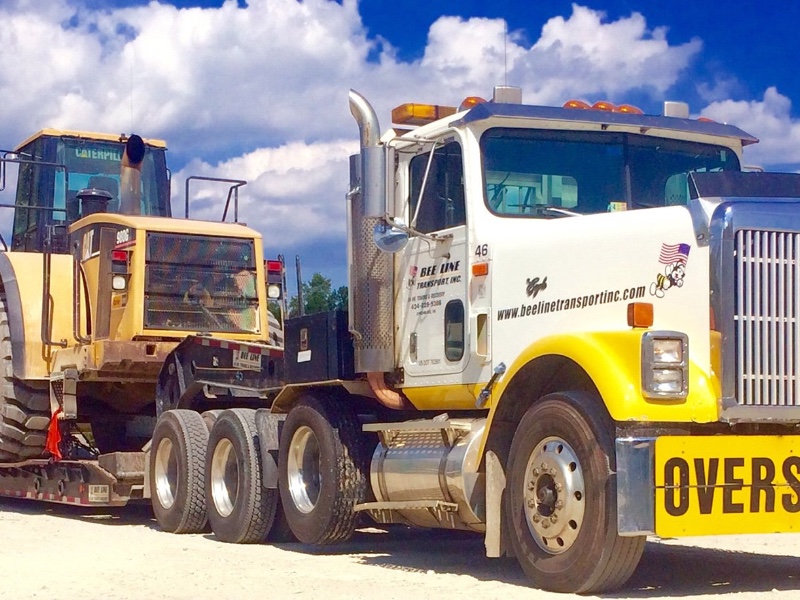
Why Lynchburg Trusts Bee Line for US-60 Heavy Transport
Bee Line Transport has been operating out of Lynchburg since 1998, and US-60 heavy transport has been part of our work from the beginning. Our team takes on the jobs other companies turn down, and our approach always begins the same way: with the right questions answered before any equipment moves. From our in-house dispatch center to our 24/7 monitored secure yard, we run a tight operation built around consistent, five-star service.
When US-60 heavy transport calls for a complex recovery, an oversize move, or a careful equipment transfer, Bee Line Transport brings the tools, the permits, and the operators to get it done. Our dedication to new technology and continuing education keeps us at the front of the industry, and our team’s genuine passion for this work carries through on every call. Reach out to our dispatch team before the move and let us walk you through the plan.
FAQ
What information should I have ready before calling for a heavy transport?
Have the overall height, width, length, and best weight estimate ready. Note the load type, its condition, and any damage to the frame, suspension, or axles. Ground conditions and access at the pickup location are also useful to share right away.
How do towing companies estimate axle weight when no scale is available?
We start with the known unit weight, load description, and typical axle group ratings for that equipment type. From there, we factor in how the load sits on the transport setup and adjust for any damage or off-center positioning. If the numbers run close to a limit, we plan around that conservatively.
What is the difference between gross weight and axle group weight in towing?
Gross weight is the total combined weight of the unit and load. Axle group weight refers to how that total distributes across specific axle sets. Roads and bridges are rated by axle group load, not total weight, so a legal gross weight can still create a violation if the distribution is uneven.
When does a heavy transport require a permitted escort?
Escort requirements depend on the load dimensions, the route, and the jurisdiction. Loads that exceed specific height, width, or length thresholds often require one or more escort vehicles. The permit application process determines this based on the approved route and local regulations.
How far in advance should I request a heavy transport permit?
It varies by load type and jurisdiction. Some permits process the same day, while others involving multiple agencies or restricted routes can take several days. Providing accurate measurements early avoids delays caused by revised applications.
What happens if a load’s height cannot be confirmed before the move?
We default to a conservative estimate and plan the route accordingly. If the height turns out to be lower, the route still works. If we planned for a lower height and it is actually taller, the route may fail at the first bridge. Confirming in person is always the right call.