

Every Rollover Call Puts More Than One Person at Risk
Semi rollovers happen often enough that most drivers on the road know someone who has been in one. The numbers behind it are sobering: towing is one of the most dangerous jobs in the country, and a rollover is a big part of why. Our crews are out on the shoulder and in live traffic on almost every Lynchburg semi recovery call that comes in, which means preventing a rollover protects more than just the driver in the cab.
Most of what causes a rollover is inside a driver’s control, and that is actually good news. It means most rollovers are avoidable with the right habits behind the wheel.
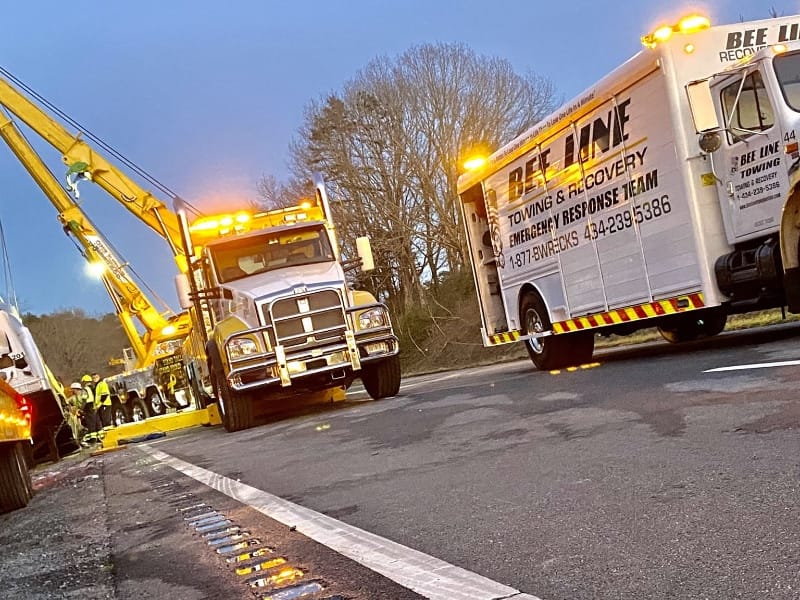
What Actually Tips a Loaded Trailer
Speed into a curve or an off-ramp is the most common trigger, since posted limits are set for cars, not a semi with a high center of gravity. A close second is cargo that sits too high, too far to one side. Or was never secured properly to begin with. And that changes how the trailer handles the moment the road curves or the truck changes lanes.
Wind and road conditions add another layer, especially for a tall or empty trailer catching a gust on an open stretch. On top of all that, the instinct to jerk the wheel after a blowout or a drift causes more rollovers than the original problem would have caused on its own.
Three Things You Can Control on Every Trip
None of this requires new equipment or extra time, just habits repeated on every run, the same habits that keep a routine trip from turning into a Lynchburg semi recovery call.
- Slow down before a curve or ramp starts, not once you are already inside it
- Check that cargo is loaded evenly and secured before you pull out
- Stay rested enough to react calmly instead of overcorrecting
We encounter close calls multiple times a day out on the roads around Lynchburg, and we would rather see fewer of them than answer another Lynchburg semi recovery call. Doing your part with these three habits goes a long way toward keeping it that way.
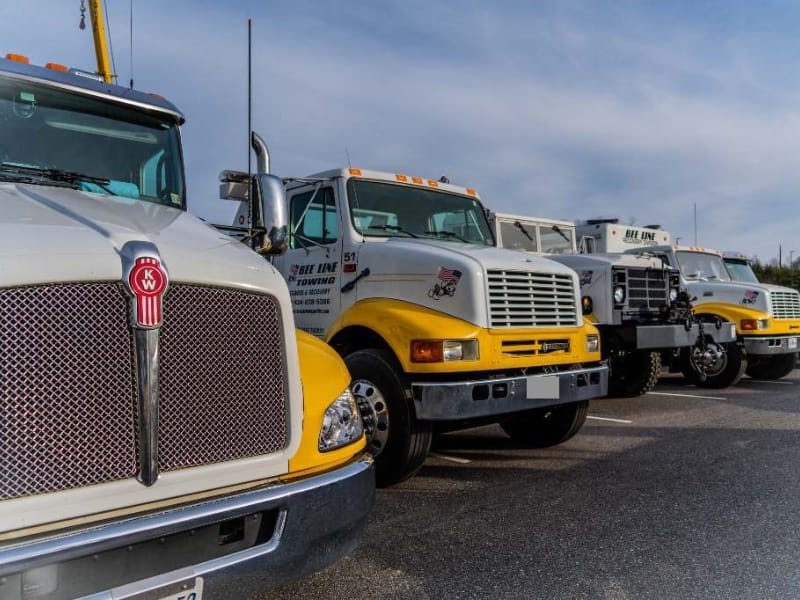
Bee Line Towing: Lynchburg Semi Recovery for Over Two Decades
Bee Line Transport started in 1998 with a small team and one tow truck. Today we handle everything from light duty towing to heavy duty recovery and diesel repair out of our Lynchburg headquarters, which includes our own dispatch center, diesel shop, and secure yard, all built to support Lynchburg semi recovery calls at any hour. That growth came from taking on jobs other towing companies turn down and treating every call for semi recovery in Lynchburg, big or small, with the same five-star standard.
We are proud to be a local Lynchburg business, and we back that up through our Charity Truck Initiative, launched in 2020 to support local charities and foundations. Knowing that we are helping our neighbors get home safely, and doing our part to prevent the next call for Lynchburg semi recovery, is what keeps our team motivated every day.
FAQs
Can a semi roll over without speeding?
Yes. Cargo distribution, sharp curves, crosswinds, road conditions, and sudden steering can contribute even when a truck is below the posted speed limit.
Why are loaded trailers more likely to tip on curves?
A loaded trailer can have a high center of gravity. As the truck turns, weight transfers toward the outside wheels, increasing the risk of tipping if speed or load distribution works against it.
Are empty trailers at risk of rolling over too?
Yes. Empty trailers are lighter but still have a large surface exposed to crosswinds. Strong gusts can make them difficult to control.
How can cargo placement affect rollover risk?
Weight concentrated high in the trailer or heavily toward one side changes its balance. Drivers should confirm that cargo is properly distributed. And secured before departure.
What should a trucker do before entering a sharp ramp?
Reduce speed before the curve begins. Waiting until the truck is already turning leaves less room for smooth braking and steering.
Why can overcorrecting cause a truck to roll?
A sudden steering input rapidly transfers weight from one side of the truck to the other. That movement can destabilize the trailer, particularly when combined with speed, a high load, or poor road conditions.