

A Caustic Load on a Tight Roadside
A tanker rollover can turn a quiet stretch of road into a difficult recovery site, especially when the cargo cannot simply be left inside for the lift. We were called to the intersection of Holcomb Rock Road and Perch Road in Bedford County after a tractor-trailer carrying sodium hydroxide overturned on its way to the Lynchburg City Water Treatment Plant. This Perch Road hazmat recovery would have to begin with the chemical load, not the wrecked truck.
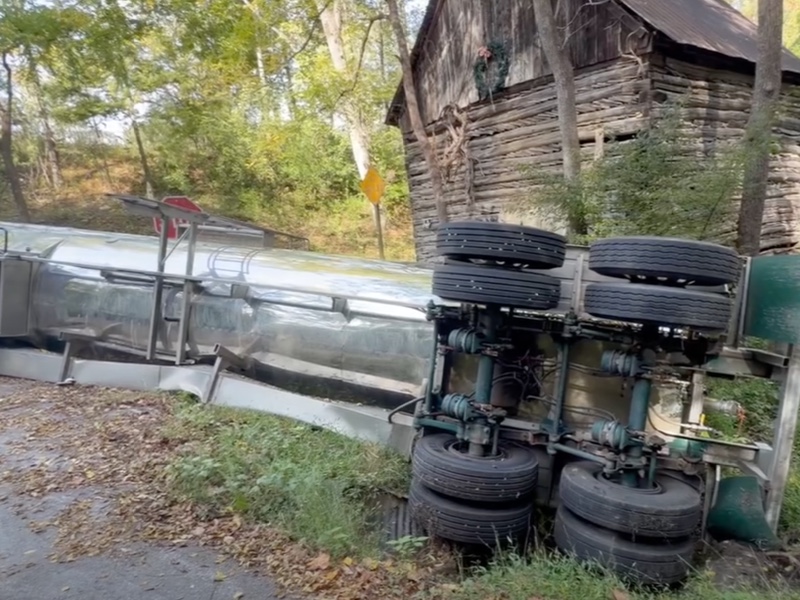
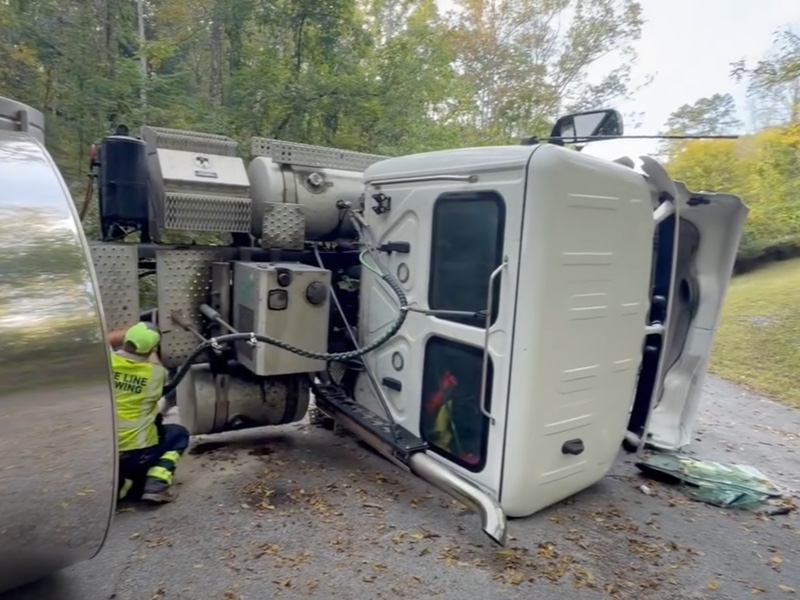
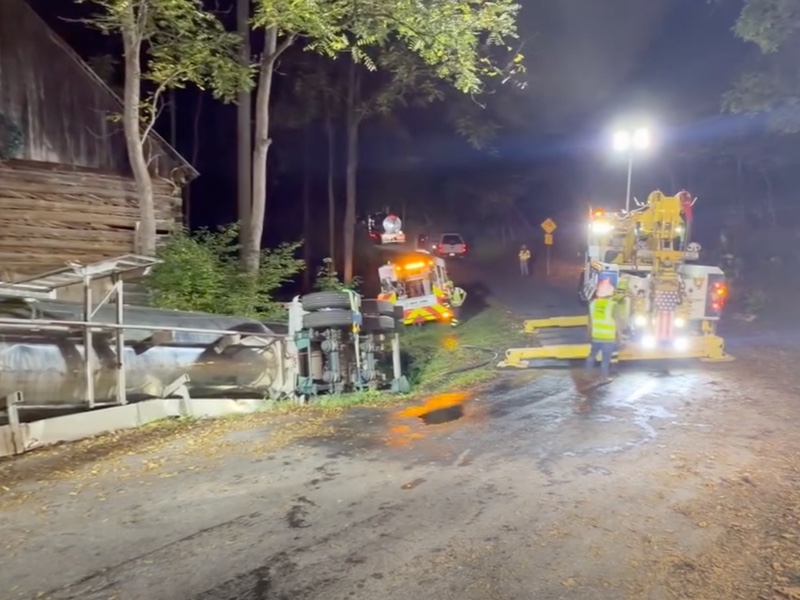
The tanker had come to rest on its side beside the road. Its wheels were facing out, the cylindrical tank was lying along the roadside, and trees crowded the area around it. An old wooden building stood nearby. We had enough of a challenge getting recovery equipment positioned without the additional concern of what was inside the tank.
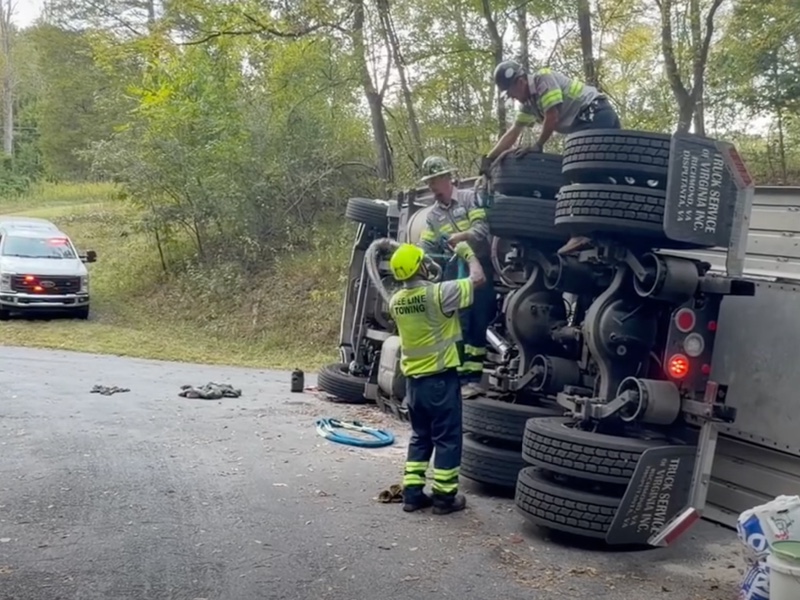
Sodium hydroxide is a caustic chemical. We could not treat the tanker as an ordinary empty trailer or assume its contents would stay put when we began to roll it. Before we could start the upright, a hazmat team from the Virginia Department of Emergency Management had to pump the tanker. That work came first.
Why the Tank Had to Be Pumped
A heavy vehicle lying on its side is difficult enough to control during a recovery. A tanker introduces another consideration: liquid cargo can move as the tank changes angle. That movement affects how the load behaves during the lift. We needed the chemical transfer completed before our rotators could begin bringing the tractor and trailer back onto their wheels.
We waited for the hazmat team to handle the sodium hydroxide. Their work addressed the cargo; ours was to recover the overturned equipment afterward. The sequence mattered because attempting to roll the tanker with its load still aboard would have introduced risks that the offload was intended to reduce.
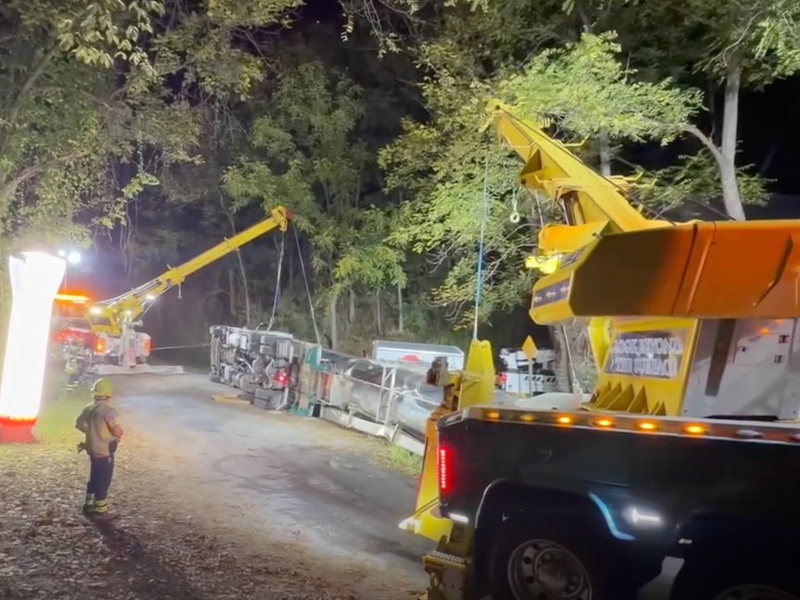
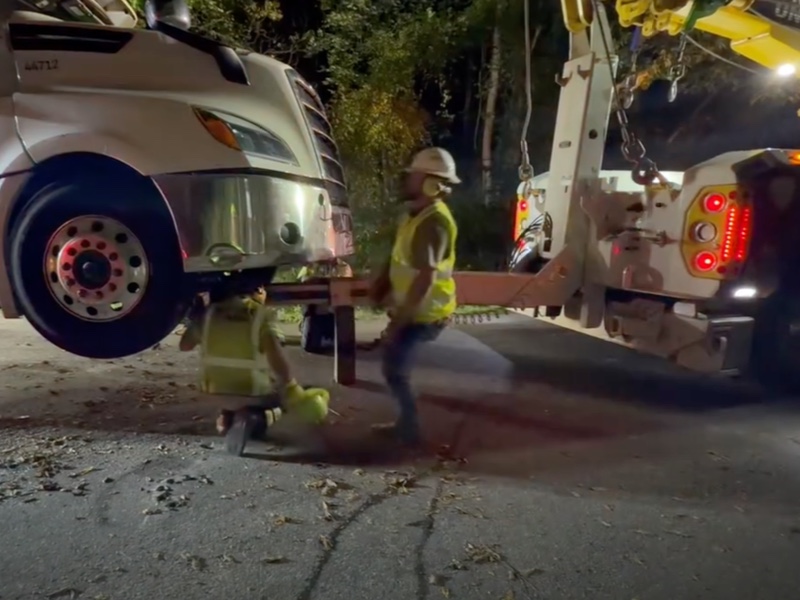
By the time we were working under floodlights, the road was lined with recovery vehicles and crews. The space between the trees and the roadside remained tight, and we had to make room for our rotators and their outriggers. There was no benefit in rushing the rigging simply because the chemical had been pumped out.
Bringing the Tanker Back Over
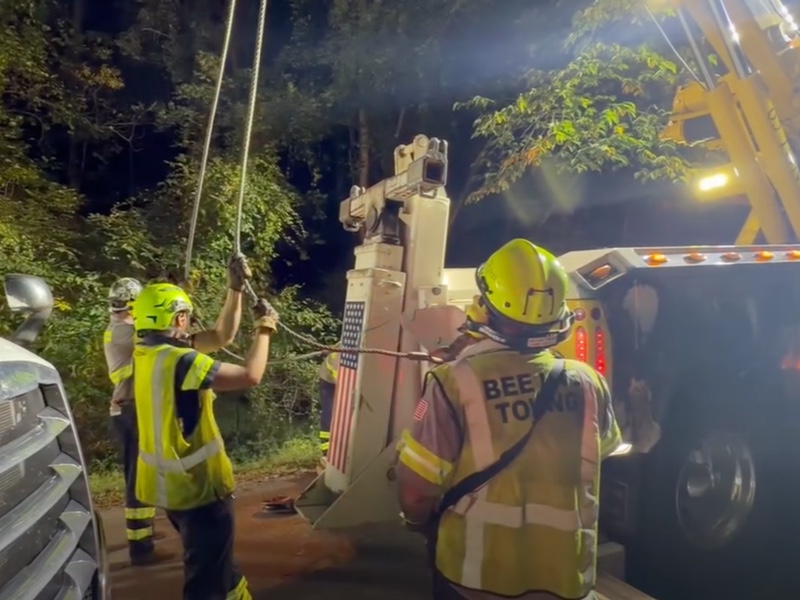
Once the hazmat team had pumped the tank, we could finally begin working on the overturned equipment itself. We set up two rotators to bring the tractor and trailer back onto their wheels. The next stage of our Perch Road hazmat recovery had to account for the tight roadside, the nearby trees, and the room needed for the rotators to work.
Our operators worked around the extended outriggers and lifting lines as the rigging was set. We had both rotators working together for this hazardous-load recovery on Perch Road, rather than relying on one truck to handle the entire upright. The goal was to bring the truck and trailer back over without letting the equipment move unpredictably toward the roadside obstacles.
We carried out the roll after the chemical transfer was complete. The tanker was back upright, but that did not mean our Perch Road tanker recovery was finished. We still had a damaged tractor-trailer to remove and a roadside scene to clear.
The Road Still Needed Clearing
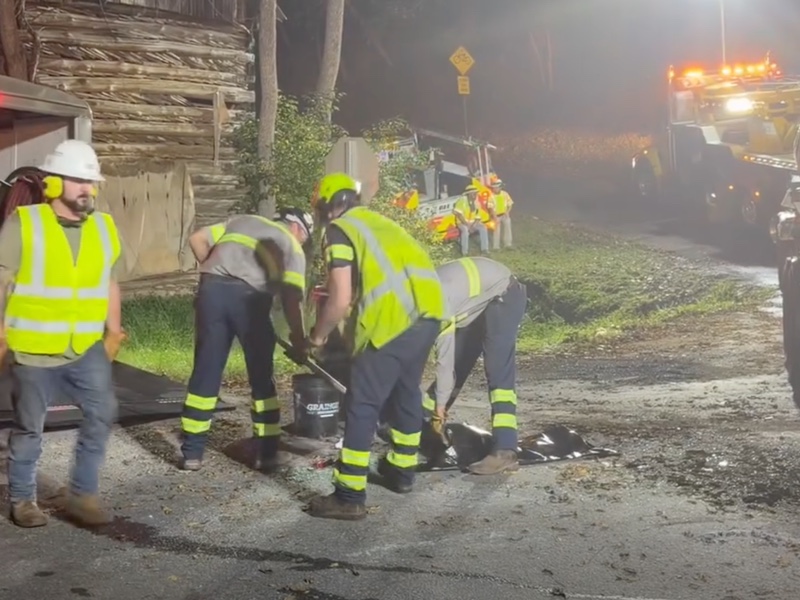
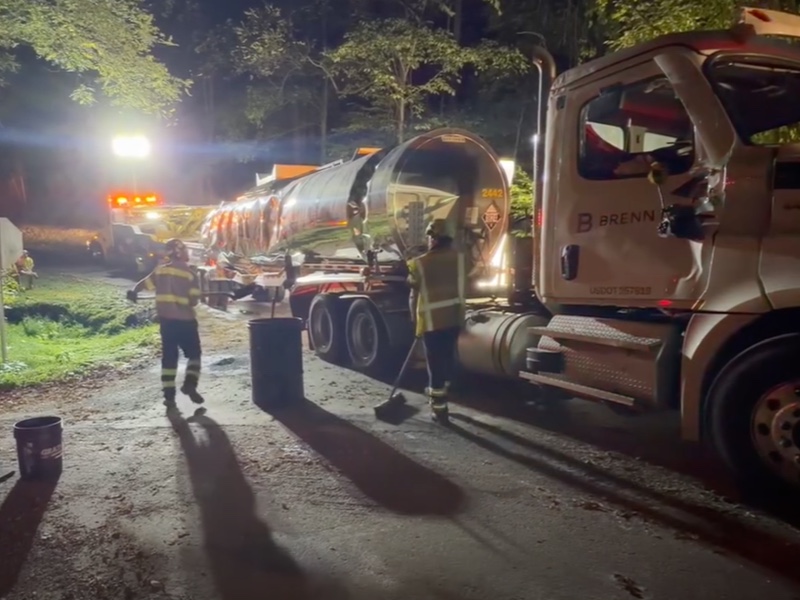
We moved from the upright into cleanup and removal. During this Perch Road hazmat response, our work followed a sequence that kept the chemical handling separate from the heavy-duty recovery:
- Wait for the hazmat team to pump the sodium hydroxide.
- Position and rig both rotators.
- Roll the tractor and tanker upright.
- Clean up the recovery scene.
- Tow the wrecked vehicle away.
There was another practical challenge after the lift: getting the damaged truck ready to leave. We used our recovery equipment to handle the tractor, then completed the towing portion of the job. Our work did not end when the wheels touched the pavement; it ended when the wrecked equipment was removed.
Bee Line Transport and Perch Road Hazmat Recovery
At Bee Line Transport, this call brought together two kinds of work that had to happen in the right order. The Virginia emergency management hazmat team handled pumping the sodium hydroxide, and our crew handled the heavy lifting, scene cleanup, and towing. We had two rotators on the job, a tanker down beside a wooded road, and a work area that remained constrained after dark.
Our role in hazmat recovery along Perch Road was to take over once the chemical transfer was complete and finish the mechanical recovery. We brought the tractor and tanker upright, cleared the scene, and towed the damaged vehicle away. It was a job of careful coordination, with the cargo determining when we could begin.
Click here to watch the full video of this recovery: [LINK]
Frequently Asked Questions
What was the overturned tanker carrying?
The tanker was carrying sodium hydroxide, a caustic chemical used in various industrial and water treatment processes. It was headed to the Lynchburg City Water Treatment Plant.
Why couldn’t the tanker be uprighted immediately?
The sodium hydroxide needed to be pumped out before the heavy-duty recovery began. Removing the liquid reduced the risks associated with shifting cargo during the upright.
Who handled the chemical transfer?
A hazmat team from the Virginia Department of Emergency Management pumped the tanker before our recovery crew began lifting it.
How many rotators were used?
We used two rotators to bring the overturned tractor and tanker back onto their wheels.
What makes a tanker rollover different from an ordinary truck recovery?
Liquid cargo can shift as a tanker changes position, affecting the forces involved in lifting it. The type of chemical being transported can also require additional precautions before recovery work begins.
What happened after the tanker was uprighted?
Our team cleaned up the recovery scene and towed the damaged vehicle away.