

Same Truck, Different Challenges
Step back and think about what a tow call actually involves. You’ll start to see why road type matters as much as anything else. The truck, the operator, and the training all travel with us wherever we go. But the environment we drive into on arrival changes almost everything about how the job gets done. From light-duty roadside assists in town to major highway recoveries, our Amherst towing team handles both ends of that spectrum, and we have learned that each one rewards a specific kind of readiness.
Highway calls and city calls share a starting point: a driver needs help and we are going to provide it. What diverges from there is the terrain, the traffic, the risk exposure, and the equipment. An operation that handles both well does not treat them as variations of the same task but as genuinely distinct disciplines, each with their own demands.
Reading a City Scene Before You Move
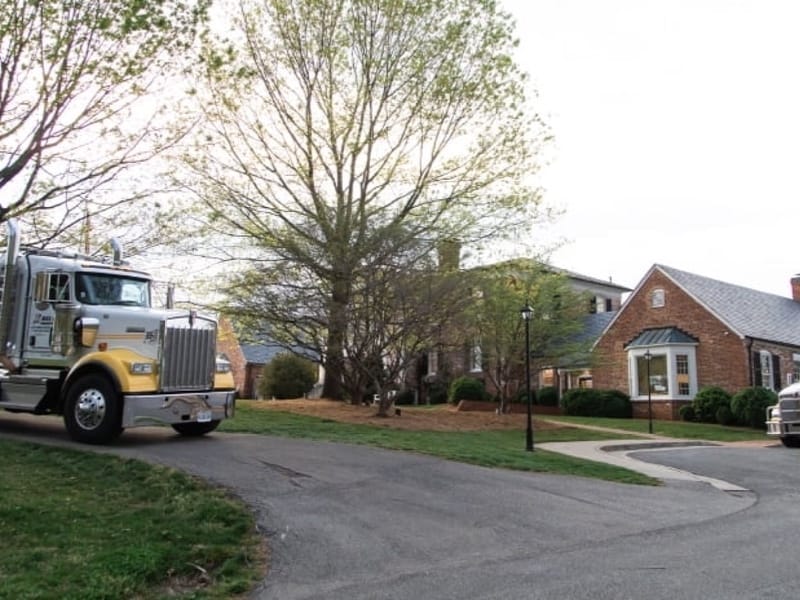
Urban towing asks for patience before it asks for anything else. Traffic on city streets moves slowly enough to manage, but the density of obstacles, parked cars, narrow lanes, and pedestrian activity means every recovery starts with a careful read of the scene. Getting positioned correctly on a residential street often involves more problem-solving than the actual tow, and rushing that step creates problems that are harder to fix than taking an extra few minutes up front.
Why Tight Spaces Demand a Different Kind of Skill
City operators develop a specific kind of spatial intelligence over time. Low clearances, parked cars on both sides, utility infrastructure, and overhead wires all factor into the approach on an urban call. Choosing the right angle, the right equipment unit, and the right rigging setup without blocking adjacent traffic or disturbing surrounding property is a genuine skill. It is the kind of work that looks routine from the outside and is not.
Highway Recovery Operates at a Different Scale
Open highway calls put our operators in a high-exposure environment from the moment they arrive. Speed differentials between stationary equipment and passing traffic can be extreme, and that gap demands a specific approach to positioning, lighting, and scene management. Our operators treat every highway call as a traffic management problem first. Because the recovery itself can only happen once we control the scene .
The equipment requirements for highway work also scale up considerably. Major recoveries often involve flatbeds, extended boom configurations, heavy-duty rigging, and commercial-load capabilities that are not necessary for a light city call. Bee Line Transport maintains a full fleet because Amherst towing and highway work around Lynchburg cover the full range from a simple neighborhood assist to a commercial vehicle recovery on an active corridor.
How We Stage for the Call Before We Leave
Experienced towing operations do not show up to a highway incident with a city-configured truck or to a tight residential street with a heavy rig that cannot navigate the block. Here is how the staging decision typically breaks down:
For urban and residential calls:
- Compact, maneuverable units
- Wheel-lift setups suited to lower-clearance environments
- Standard lighting packages
For highway and large-load calls:
- Flatbeds and heavy-duty rigging
- Extended boom configurations
- Full high-speed safety lighting
- Commercial recovery capability
Getting the right unit moving toward the right call is part of what separates an efficient Amherst towing response from one that wastes time regrouping on-site.
Bee Line Transport: Full-Range Amherst Towing Built for Every Road
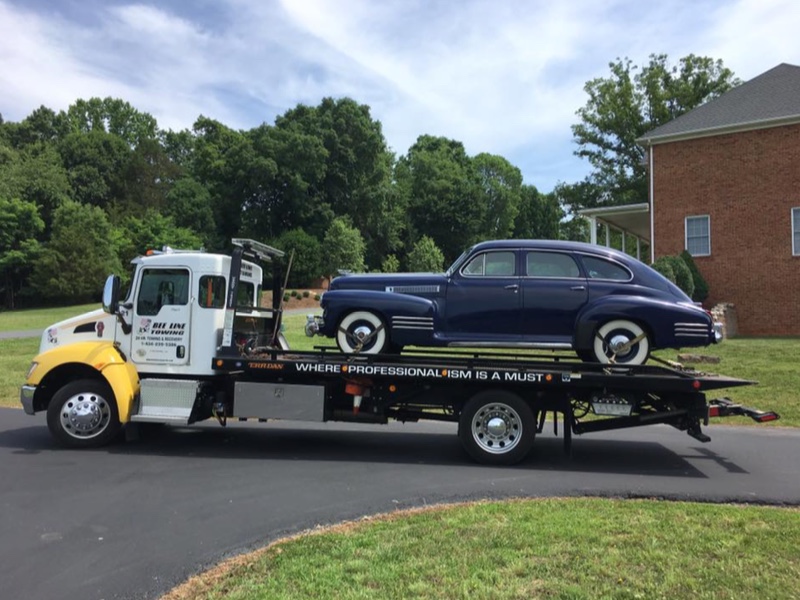
Bee Line Transport has operated out of Lynchburg since 1998, growing from one truck and a small team into a full-service Amherst towing and transportation operation with light, medium, and heavy-duty capability across the board. Our secure headquarters includes in-house dispatch, a diesel shop, and a 24/7 monitored yard, which means our Amherst towing response is coordinated, equipped, and ready at any hour. We take on recoveries that other companies decline, not because we are reckless, but because our team has the training and the tools to handle them.
From city side streets to major highway corridors, our operators work all of it. The towing industry is statistically one of the most dangerous in any sector, and that fact keeps our Amherst towing team focused on continuous education, equipment investment, and methodical work. When you need a tow in the Lynchburg area, Bee Line Transport is built for the call.
FAQ
What types of vehicles can a heavy-duty tow truck recover?
Heavy-duty units are built for large commercial trucks, semi-trailers, buses, construction equipment, and vehicles involved in major accidents. They can also handle oversized loads and off-road recoveries that exceed the capacity of a standard light or medium-duty rig.
How do towing companies handle accidents involving commercial trucks?
Commercial accident recoveries typically require heavy-duty rigging, coordinated scene management, and sometimes a secondary unit for load transfers or debris clearance. The operator assesses the vehicle’s condition, its position, and any hazards before rigging begins to avoid secondary damage.
What should I do if my vehicle breaks down on the highway at night?
Get as far off the travel lanes as possible, turn on your hazard lights, and stay inside with your seatbelt on if you are safely on the shoulder. If you can deploy reflective triangles behind the vehicle, do it. Call for a tow immediately rather than attempting repairs on a live shoulder at night.
How does a towing company decide what equipment to bring to a recovery?
Dispatch asks about the vehicle type, its condition, and the exact location. A standard passenger car on a surface street needs a different unit than a tipped trailer on a highway median. Matching the equipment to the call before dispatch saves time and avoids unnecessary on-site improvisation.
What is the difference between a rollback and a wheel-lift tow?
A rollback, or flatbed, loads the entire vehicle onto a flat platform and transports it without the drive wheels touching the road. A wheel-lift raises either the front or rear axle while the other set of wheels rolls. Flatbeds are generally preferred for all-wheel-drive vehicles, low-clearance cars, and significantly damaged vehicles.
How long does a highway recovery typically take compared to a city call?
Highway recoveries tend to run longer due to travel time to the scene, heavier equipment requirements, and the care needed to work safely in a high-speed environment. A straightforward city wheel-lift might take 20 to 30 minutes; a complex highway recovery involving rigging or a commercial load can take several hours.