

Turn for the Worse
Every day on the highway we watch tractor trailers move through curves, ramps, and tight turns. A tractor may clear the corner with room to spare, yet the trailer tracks a much tighter path behind it. This behavior creates the situation drivers call a trailer run over. The rear wheels cut across the inside of a turn and can climb curbs, strike guardrails, or slide off pavement. Situations like this can escalate into serious incidents that lead to a lot of our US-29 semi towing calls along busy trucking corridors.
We pay attention to these patterns because highways like US-29 see steady freight movement. Long trailers, heavy loads, and tight roadway design create conditions that demand constant awareness. Small steering mistakes can place a trailer at the wrong angle during a turn. Once that angle increases, the weight of the trailer begins to shift and the chance of a rollover rises quickly.
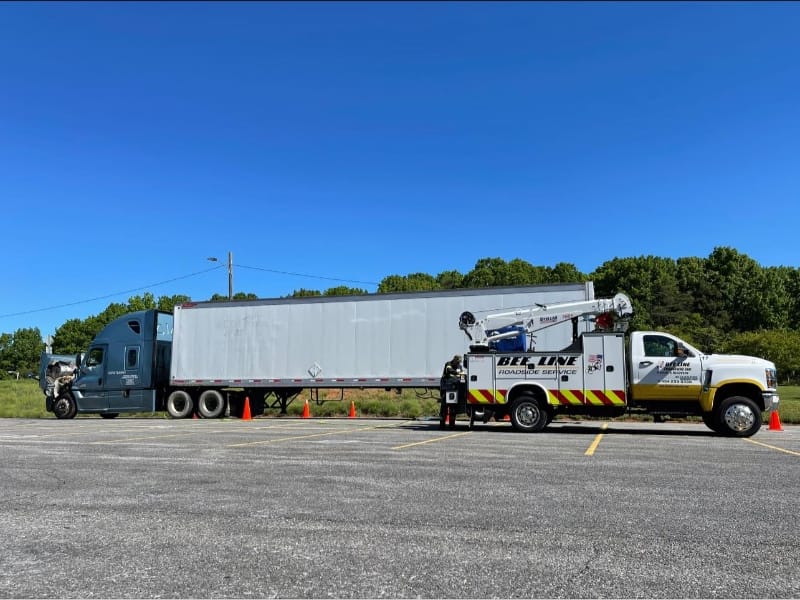
How Trailer Tracking Creates Risk
The trailer does not follow the same line as the tractor. When the tractor turns left or right, the trailer cuts inward toward the center of the turn. Drivers call this off tracking. The longer the trailer, the more noticeable the effect becomes.
A driver may believe the truck cleared a corner simply because the tractor passed through without issue. The trailer continues moving through the arc and sweeps closer to the inside edge. If the inside shoulder drops away or the curb stands high, the trailer wheels can climb it and tilt the load.
Weight Shift During a Turn
Cargo movement plays a major role in rollovers. A heavy trailer carries momentum. As the truck enters a curve, that weight shifts toward the outside of the turn. When the trailer already sits at a sharp angle, that sideways force increases. The combination of tight steering and shifting cargo can lift the inside wheels off the pavement.
We watch this happen most often on highway ramps and city intersections. Drivers who enter the turn too quickly struggle to correct the trailer angle. The weight transfer grows stronger with every second.
Common Situations That Lead to Trailer Run Overs
Several driving habits increase the chance of a run over or rollover event. We see patterns in many recoveries and roadside incidents. A few examples appear again and again.
- Turning too sharply at intersections
- Entering ramps at excessive speed
- Misjudging trailer length during tight corners
- Allowing the trailer wheels to drop off the pavement edge
- Sudden steering corrections while the trailer carries a heavy load
Each of these actions pushes the trailer closer to the edge of stability.
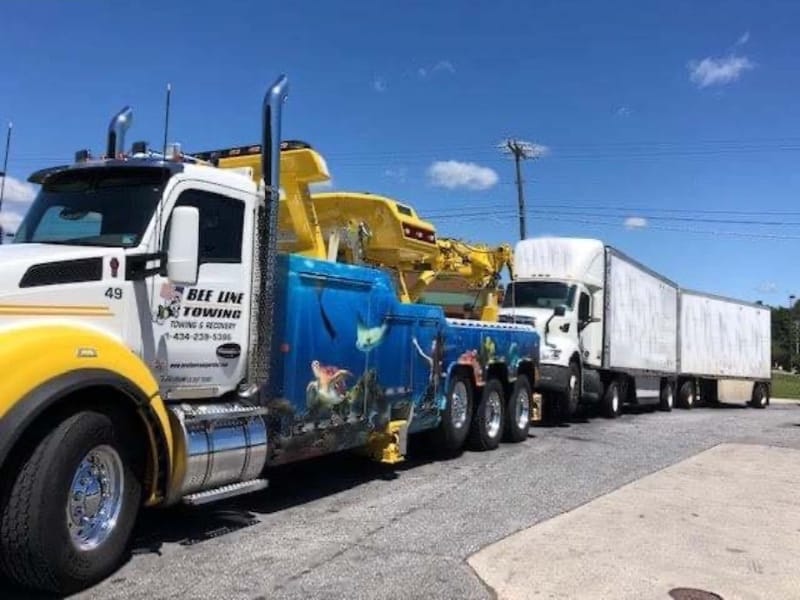
Bee Line Transport Delivers the US-29 Semi Towing Support Truckers Can Trust
Highway freight routes demand constant vigilance, and incidents still happen even with experienced drivers behind the wheel. Our team at Bee Line Transport spends a great deal of time assisting trucks that experience rollovers or trailer run overs. Many of those calls involve US-29 semi towing, where traffic volume and roadway curves challenge even careful operators.
When a trailer tips or slides off pavement, recovery requires patience and careful planning. We respond to US-29 semi towing situations that involve overturned trailers, cargo shifts, and trucks stuck along highway shoulders. Our crews bring experience built from years of heavy recovery work.
Bee Line Transport continues assisting drivers across the region with US-29 semi towing whenever these incidents occur. From uprighting overturned trailers to clearing blocked roadways, our crews handle US-29 semi towing work every week. The lessons learned during US-29 semi towing recoveries help drivers stay alert and avoid the conditions that lead to dangerous rollovers.
FAQ
What is trailer off tracking and why does it happen?
Trailer off tracking occurs because the rear wheels of a trailer follow a tighter path than the tractor during a turn. The longer the trailer, the more noticeable this effect becomes. When a truck enters a corner, the trailer wheels cut inward toward the inside edge of the turn.
What types of roads increase the chance of a tractor trailer rollover?
Sharp highway ramps, narrow intersections, and roads with steep shoulders create higher risk. These areas force trucks to turn at tighter angles. Uneven pavement or soft ground near the edge of the road can also cause a trailer to lean or tip.
How does cargo weight affect trailer stability?
Heavy cargo shifts toward the outside of a turn due to momentum. If the load moves too quickly, it can pull the trailer off balance. Unevenly distributed cargo increases the risk because one side of the trailer carries more force during a turn.
What are early warning signs that a trailer is close to tipping?
Drivers may notice the trailer leaning more than expected or the steering wheel feeling heavier during a turn. Tire noise can also increase when the load presses hard against the outside wheels. These signals indicate the truck needs to slow down and straighten out.
Why are highway ramps common locations for rollovers?
Ramps often combine tight curves with downhill grades. Gravity pulls the load forward while the truck turns. If the driver enters the ramp too quickly, the combined forces can push the trailer beyond its balance point.
How can drivers reduce rollover risk during tight turns?
Slowing before the turn is one of the most effective steps. Taking wider turning paths gives the trailer more room to track properly. Regular mirror checks also help drivers watch the trailer wheels and keep them clear of curbs and pavement edges.