

Paws and Pulley Power
It was a normal Wednesday evening until about 8:30 pm, when Winnie’s owner let her out for a quick break. Seconds later, she heard a scared yelp and ran outside to find the pup at the bottom of what looked like a 50-foot sinkhole in the backyard. An old well had collapsed, and poor pup Winnie had fallen all the way down. The Lynchburg Fire Department got the call right away. Their crews had just wrapped up a structure fire on Campbell Avenue, and they rolled straight from that scene into this one. Already focused and working a plan. Soon after, they reached out to us at Bee Line Transport for towing help. We were eager to help, as we’ve never done a Lynchburg wrecker service in support of a dog rescue before.
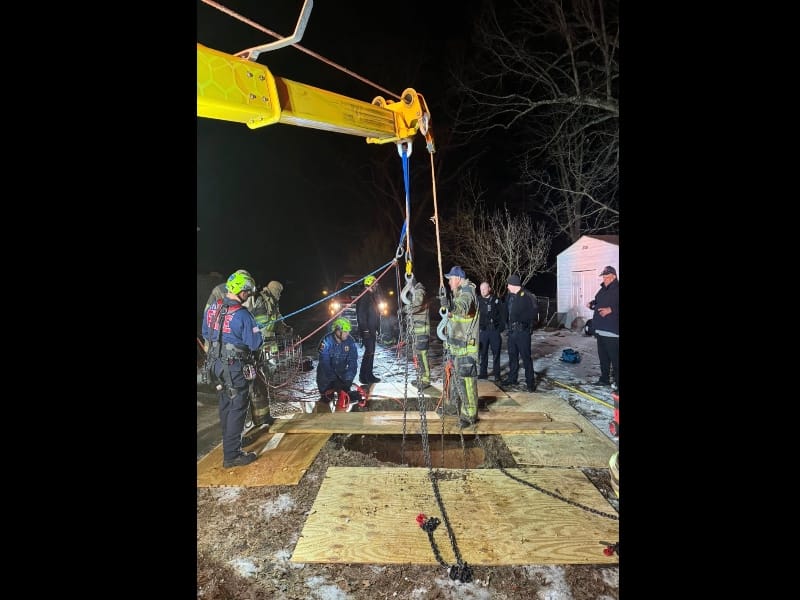
Keeping the Scene Stable Came First
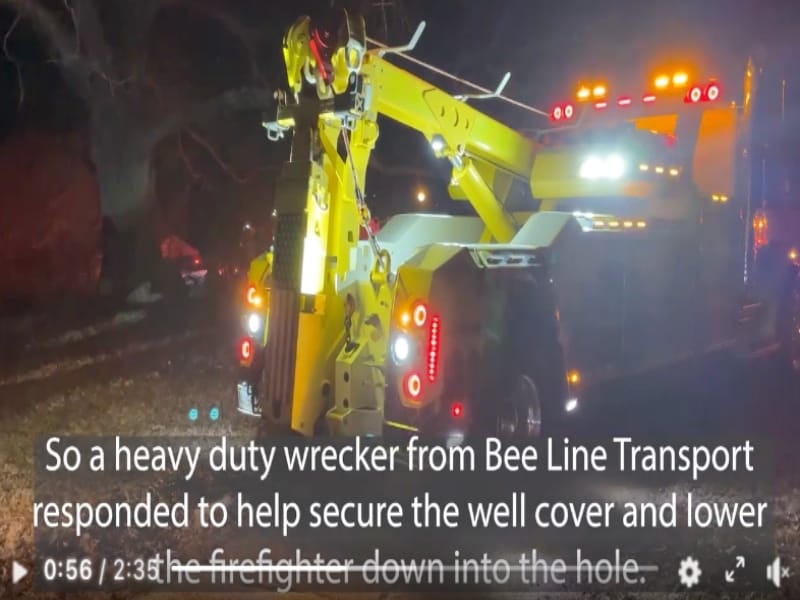
The firefighters had already assessed the area and brought us in for one clear purpose: use our truck and equipment to create a stable, controlled setup so they could reach Winnie safely. Our truck was used to stabilize the concrete slab next to the sinkhole, so firefighters could safely enter the well. That step mattered more than anything else, because a shifting slab or unstable edge could have turned a rescue into a much larger emergency, if the sinkhole collapsed further.
Once we had the slab secured, the mood on scene changed. You could feel the team settle into the next phase because the foundation was finally steady.
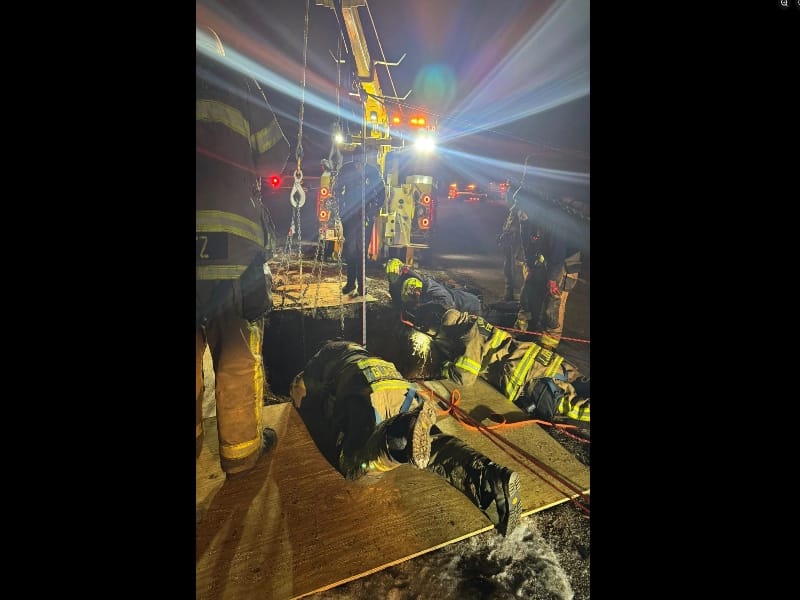
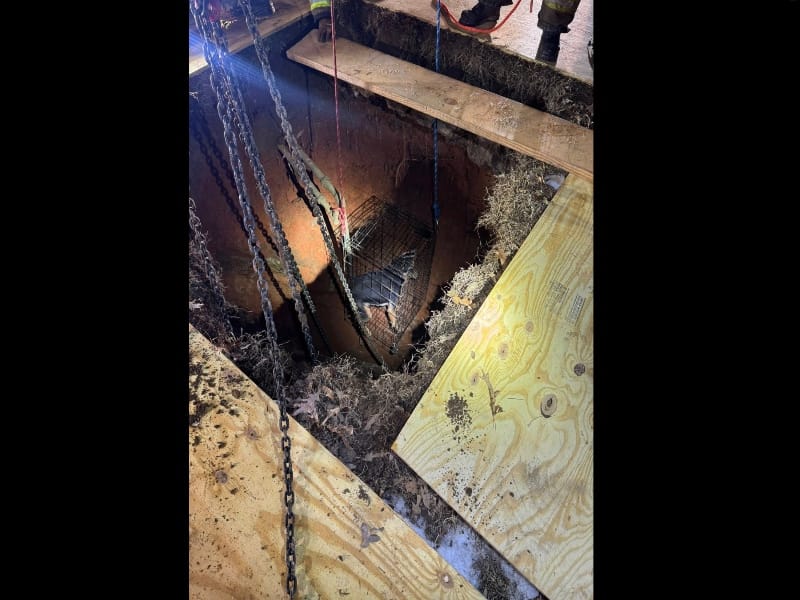
Turning a Wrecker Boom into a Rescue Tool
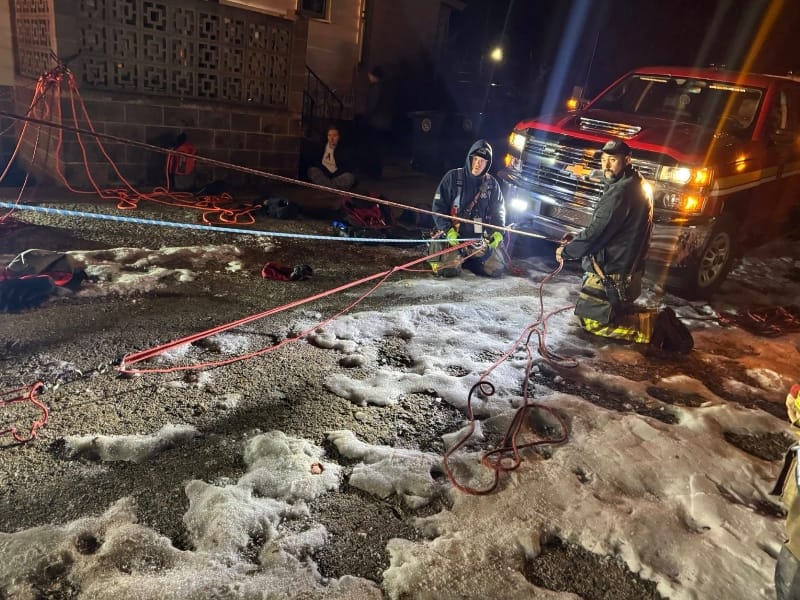
After everything was stabilized, firefighters used our wrecker boom to hook up a pulley system. They needed a reliable, strong anchor point that could handle controlled lowering and lifting. We worked side by side with them as they set it up, and they treated every connection like it mattered, because it did!
Here are a few parts of the setup that made the operation work:
- Stabilizing the concrete slab before anyone entered the opening
- Using the wrecker boom as a secure high point for rigging
- Connecting pulleys carefully and checking alignment before load was applied
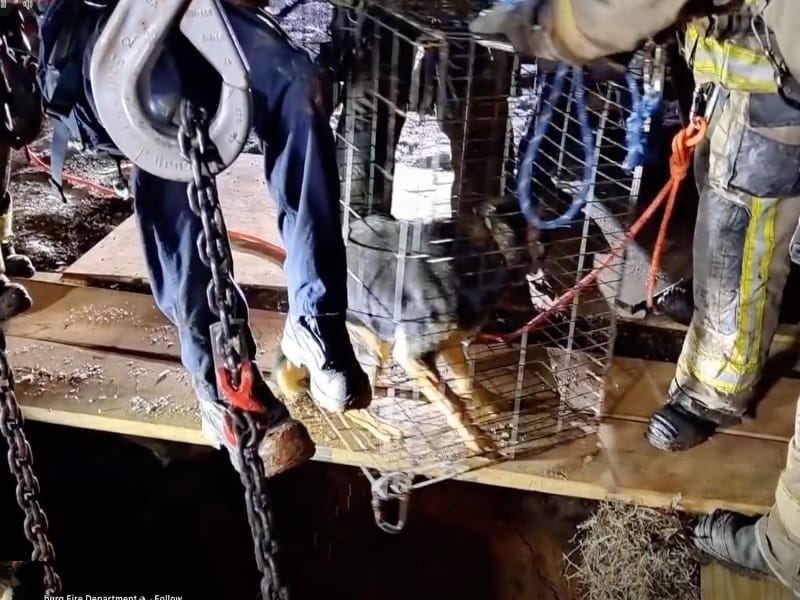
- Lowering a firefighter and a cage into the hole in a controlled way
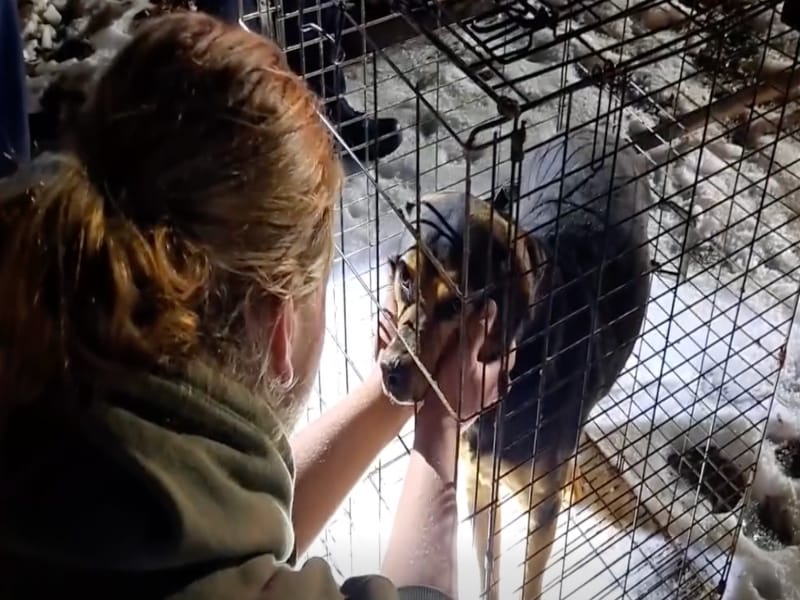
And then came the moment everyone wanted: Winnie was finally pulled out. Apart from a few cuts and bumps, she was unharmed. That’s the result we all came for.
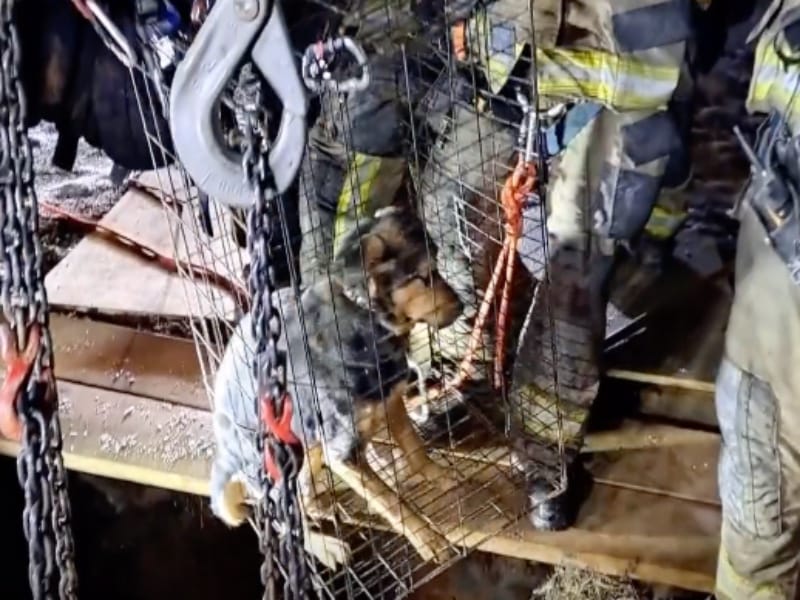
The Pros Who Made Winnie’s Big Save Happen
Neal Led with Care
Neal handled the entire situation with real care and steady focus. He came away from it genuinely impressed, and he said he was blown away by the level of professionalism that Lynchburg Fire Department displayed. We’ve worked plenty of challenging scenes, and we know what it looks like when people take their jobs seriously. This was that, from start to finish.
Bee Line Transport and our Lynchburg Wrecker Service in Action
We’re grateful we could be there to help, and we’re even more grateful that Winnie is enjoying another day of fun, love, and rest with her family. For us at Bee Line Transport, this was a clear reminder that Lynchburg wrecker service work sometimes means showing up for more than vehicles on the roadside.
When the Lynchburg Fire Department needs an extra set of capable hands and the right equipment, we work hand in glove with them. We coordinate positions, confirm signals, and stay in constant communication so their crew can focus on the rescue while we keep the heavy gear steady and predictable. On this Lynchburg wrecker service call, our truck became part of the plan, and our job was to make sure every move stayed controlled. That’s Lynchburg wrecker service at its best: calm support, solid footing, and teamwork that keeps the scene moving forward.
We’re proud to offer Lynchburg wrecker service, and we’re thankful we could stand alongside the Lynchburg Fire Department and help bring Winnie back to her family safe and unharmed. If the next call for Lynchburg wrecker service is the usual kind, we’re ready.
FAQ
What should I do first if my pet falls into a hole or confined space?
Call 911 immediately and keep people and other pets away from the edge. Stay on the phone, describe what happened, and follow instructions until responders arrive.
Why is stabilizing the ground so important during a rescue?
Unstable edges can shift without warning and injure rescuers or the animal. Stabilizing the surface helps prevent collapse and gives responders a safer place to work.
How can a tow truck help in a rescue that is not vehicle-related?
A wrecker can provide controlled lifting, steady tension, and a strong anchor point for ropes and pulleys. That support helps responders move people or equipment in a measured, predictable way.
Is it safe to try lowering a rope or climbing down to help an animal myself?
No. Confined spaces and sudden ground movement create serious risks. Wait for trained responders with the right gear and safety procedures.
Why do responders “triple check” rigging and connections?
Small errors can cause a sudden drop or line failure. Re-checking connections, angles, and load points reduces risk and helps the operation stay controlled.
How can homeowners reduce the risk of hidden wells or sinkholes on their property?
Ask about property history, look for old well records if available, and watch for signs like soft ground, new depressions, or cracking near concrete. If you suspect a hazard, contact a qualified professional to evaluate it before anyone goes near it.